AC Maintenance Las Vegas NV that keeps your cool air flowing
AC Maintenance Las Vegas NV is the seasonal service that keeps your system efficient, your energy bills predictable, and your home cool through triple-digit summers. We inspect, clean, and tune every component, from the condenser coil to the thermostat, so small issues get caught before they become August emergencies. Whether you own a single-family home in Summerlin or manage units in Sunrise Manor, our team delivers air conditioning maintenance Las Vegas homeowners and property managers can schedule around.
Every maintenance visit covers the full inspection, cleaning, and testing checklist below. Parts, refrigerant, and major repairs are quoted separately if we find something that needs attention. You'll always see the price before we start any additional work.
Refrigerant pressure check
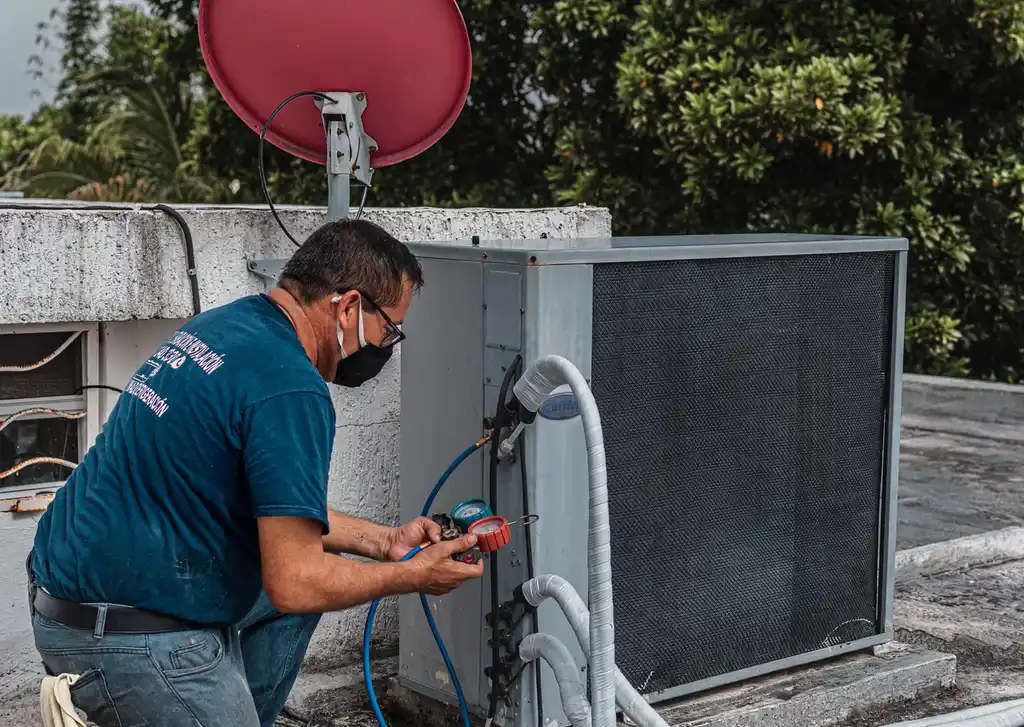
We connect a manifold gauge set and read suction and liquid pressures, then calculate superheat and subcooling. If charge is low, we use a leak detector to find the source before adding refrigerant.
Electrical component testing
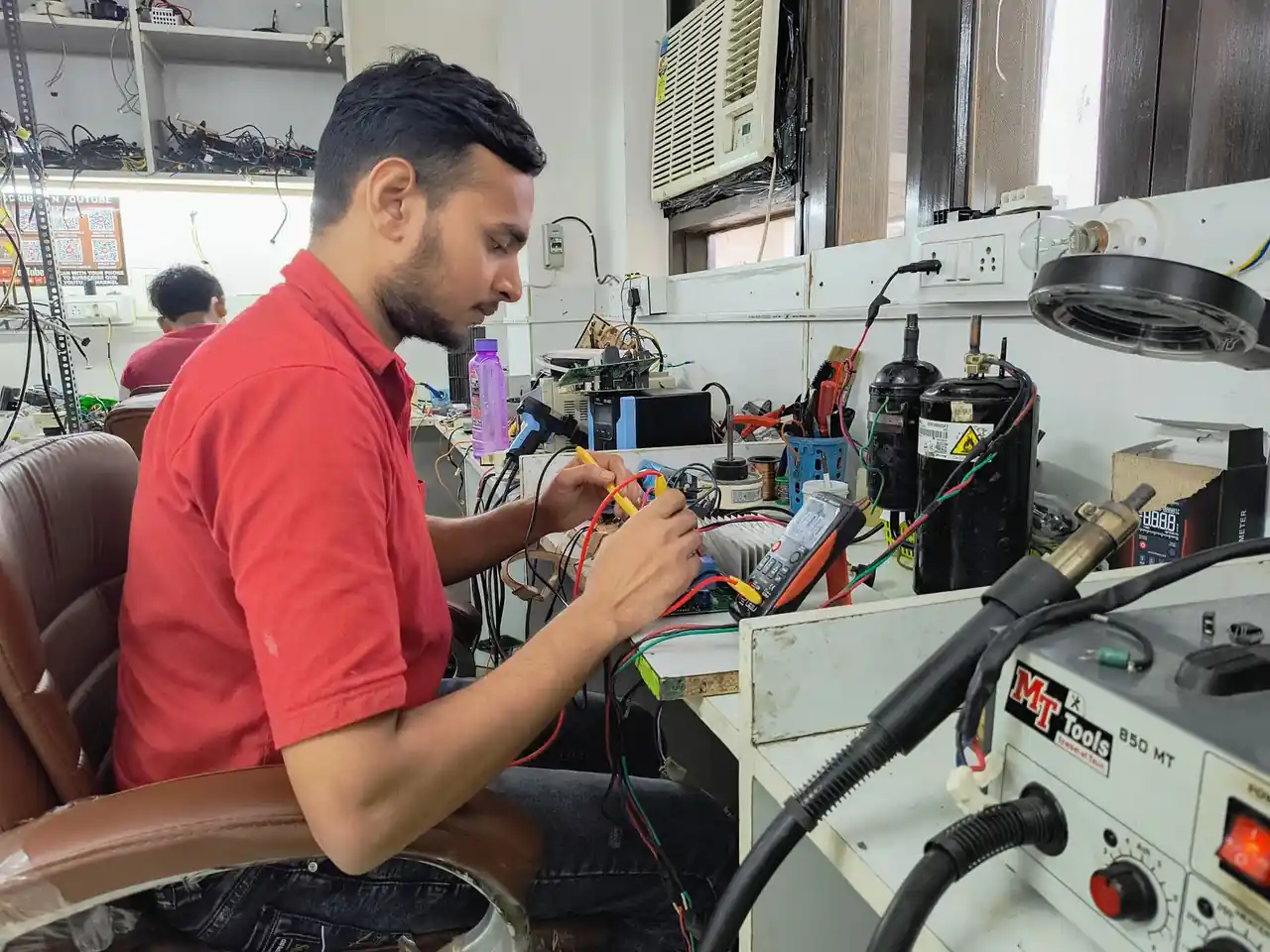
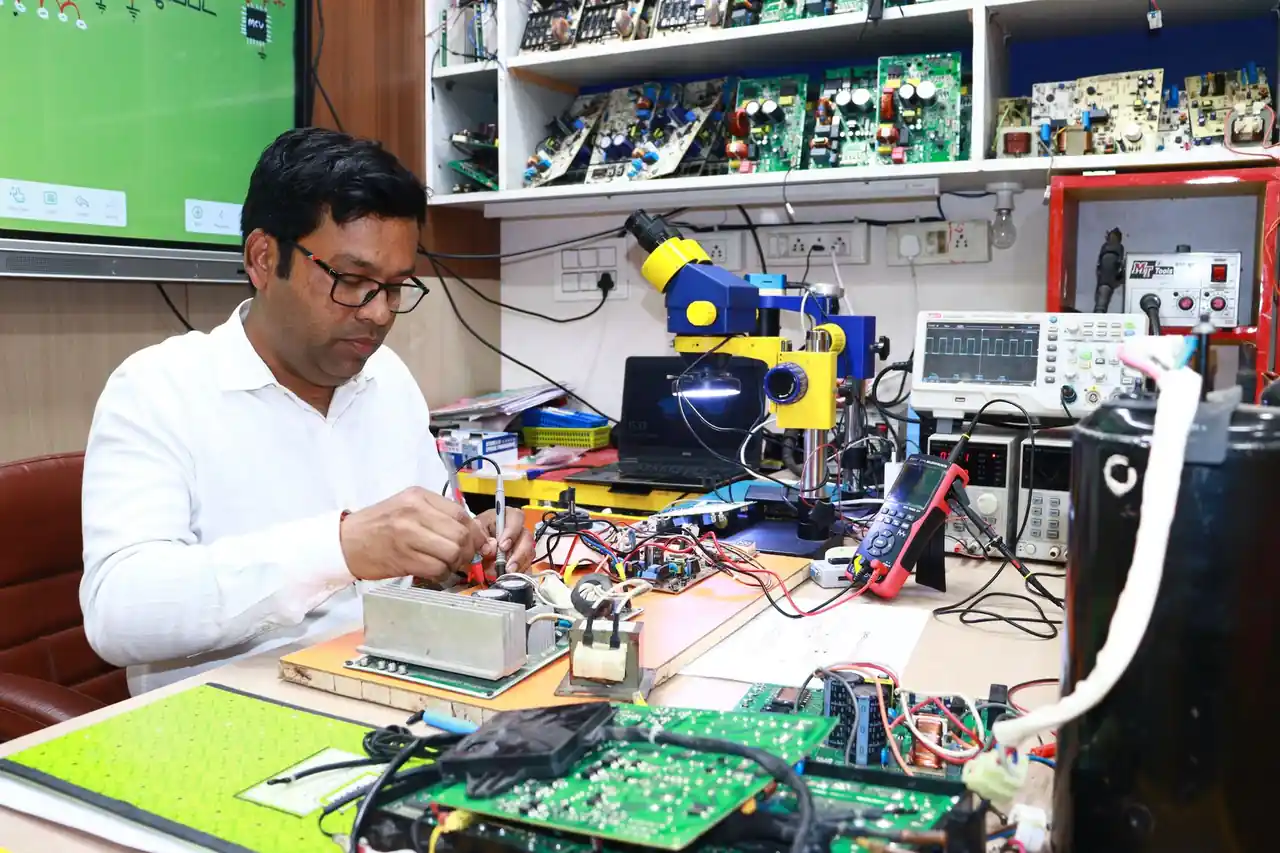
A multimeter and clamp meter check capacitor microfarads, contactor condition, and amp draw on the compressor and blower motor.
Coil cleaning
We wash the condenser coil with coil cleaner and straighten bent fins with a fin comb. The evaporator coil gets inspected for dust and frost. Clean coils restore airflow and cut compressor run time.
Drain line clearing
A clogged condensate drain is the most common cause of water damage around an air handler. We flush the line, check the trap, and verify the float switch works.
Filter replacement
We swap your air filter with the correct size and MERV rating for your system. In dusty Las Vegas conditions, most homes need a filter change every 60 to 90 days.
Thermostat calibration
We verify the thermostat reads accurately and cycles the system correctly. If you have a Nest or Ecobee, we check the schedule and connectivity while we're there.
Homes and businesses.
The approach is the same for a home and a business. What changes is the access, the schedule and who needs the paperwork.
For homes
We service split systems, heat pumps, and mini-splits in houses and condos across the valley. Every visit ends with a written report and a clear picture of what your system needs.
Spring tune-up before summer
Fall check after cooling season
Filter changes every 60 to 90 days
For businesses
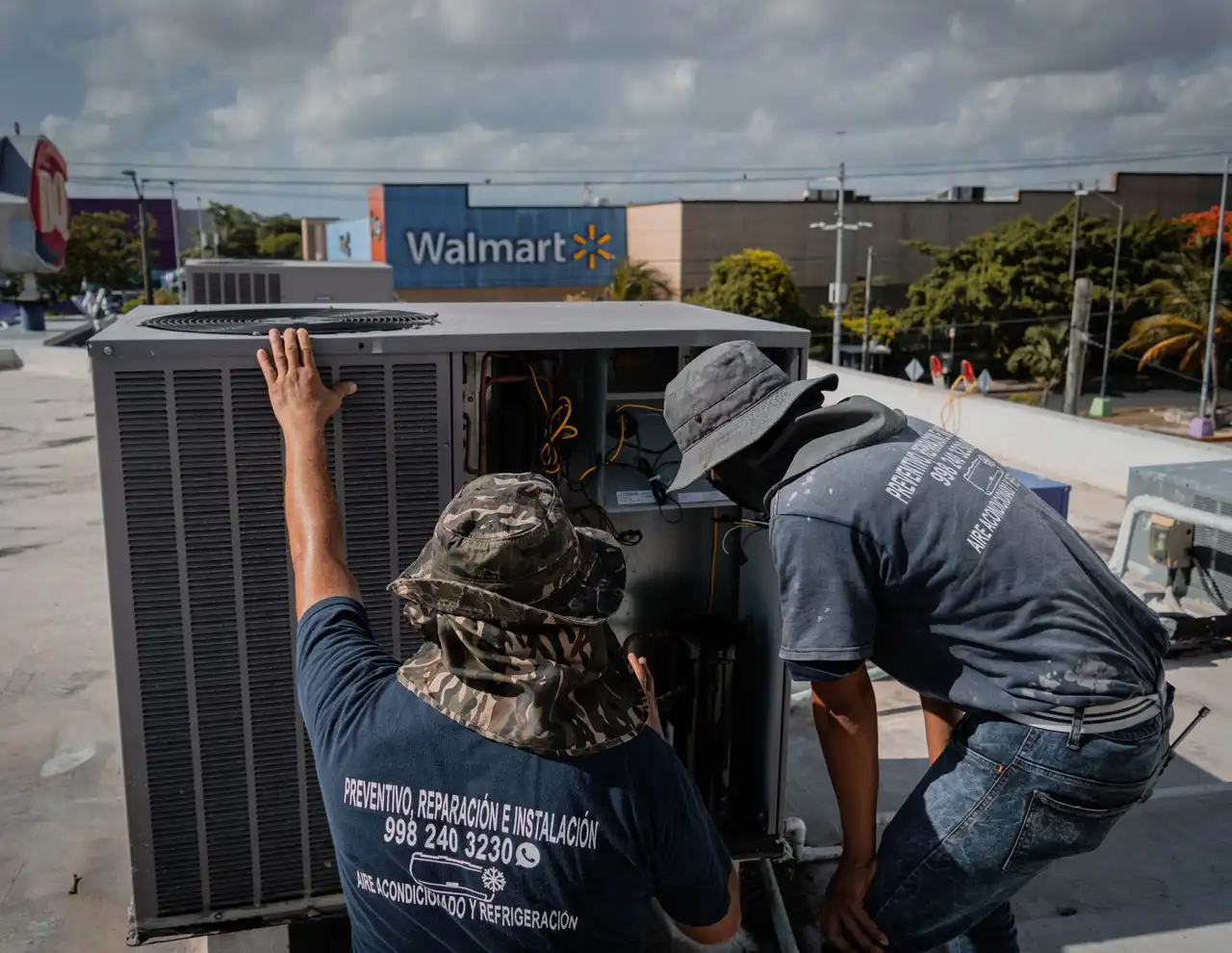
We maintain rooftop units and split systems for restaurants, retail, and small offices. Scheduling works around your business hours so operations aren't disrupted.
Rooftop unit maintenance
Multi-zone split systems
Per-door pricing for portfolios
What AC Maintenance Las Vegas NV actually involves
A plain-language look at what AC Maintenance involves and when it is needed.
AC Maintenance Las Vegas NV is a scheduled service visit that inspects, cleans, and tunes every part of your cooling system before it has to work its hardest. We pull the access panel, check refrigerant pressures with a manifold gauge set, test the capacitor and contactor with a multimeter, and wash the condenser coil with coil cleaner. We check the blower motor, clear the drain line, and test the thermostat calibration. A standard visit runs 60 to 90 minutes and covers 20-plus checkpoints, from the evaporator coil to the line set insulation.
In Las Vegas, your AC runs 8 to 10 months a year, often 12 to 16 hours a day in July and August. That workload wears capacitors, dries out duct insulation, and packs the condenser coil with fine desert dust. If you have been searching for AC maintenance Las Vegas NV near me, the answer is a spring or fall visit before the system hits peak load.
A clean coil, a correct charge, and a tested capacitor are what keep a Las Vegas system running through August.
What it is
A scheduled visit that inspects, cleans, and tests every part of your cooling system.
When you need it
Spring and fall, or any time your system runs longer than it used to.
What to expect
A 60 to 90 minute visit, 20-plus checkpoints, and a written report with all readings.
What to expect on your AC maintenance visit
Every visit follows the same five-step sequence, whether we're servicing a Goodman split system in Spring Valley or a Daikin ductless setup in Henderson. Here's how the appointment runs.
Book and confirm
Call or book online and we lock in a two-hour arrival window. We text you the technician's name and ETA the morning of the visit. Most appointments are scheduled within 48 hours, and we offer morning and afternoon slots so you don't have to burn a full day.
Book
Confirm
Text ETA
System walkthrough
The tech walks your system with you first. We ask about odd noises, warm rooms, or thermostat behavior you've noticed. Then we note the model, serial, and filter size, and check the air handler and outdoor condenser for obvious issues before opening anything up.
Walkthrough
Questions
Note model
Inspection and testing
We pull readings with a manifold gauge set and clamp meter: suction and liquid pressures, superheat, subcooling, amp draw on the compressor and blower motor. We test the capacitor and contactor, check the thermostat, and inspect the evaporator coil for frost or debris. This step takes 30 to 45 minutes.
Test
Read
Inspect
Cleaning and tuning
We wash the condenser coil with coil cleaner, comb bent fins with a fin comb, clear the condensate drain line, and replace or clean the air filter. We tighten electrical connections, verify refrigerant charge, and adjust the thermostat if needed. Most cleaning and tuning work takes 20 to 30 minutes.
Clean
Tune
Verify
Report and recommendations
Before we leave, we walk you through the readings, show you photos of anything we found, and explain what's normal wear versus what needs attention soon. You get a written summary by email the same day. No surprise line items, no pressure to buy anything you didn't ask about.
Report
Photos
Summary
Tools and methods we use on every visit
Move across a circle, or focus it and press Enter, for an illustrative thermal view of the photograph.
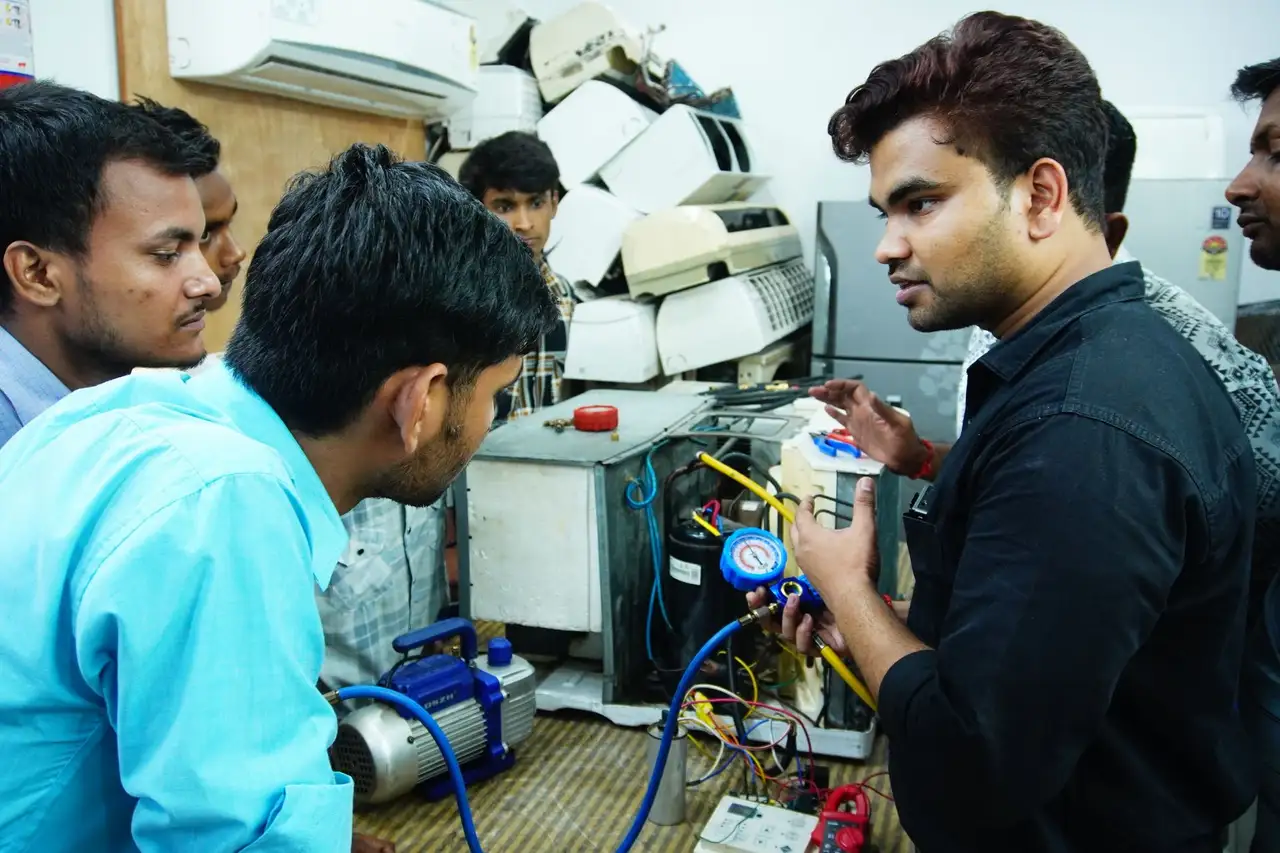
Manifold gauge set
Reads suction and liquid line pressures so we can calculate superheat and subcooling and verify the system is charged to manufacturer spec.
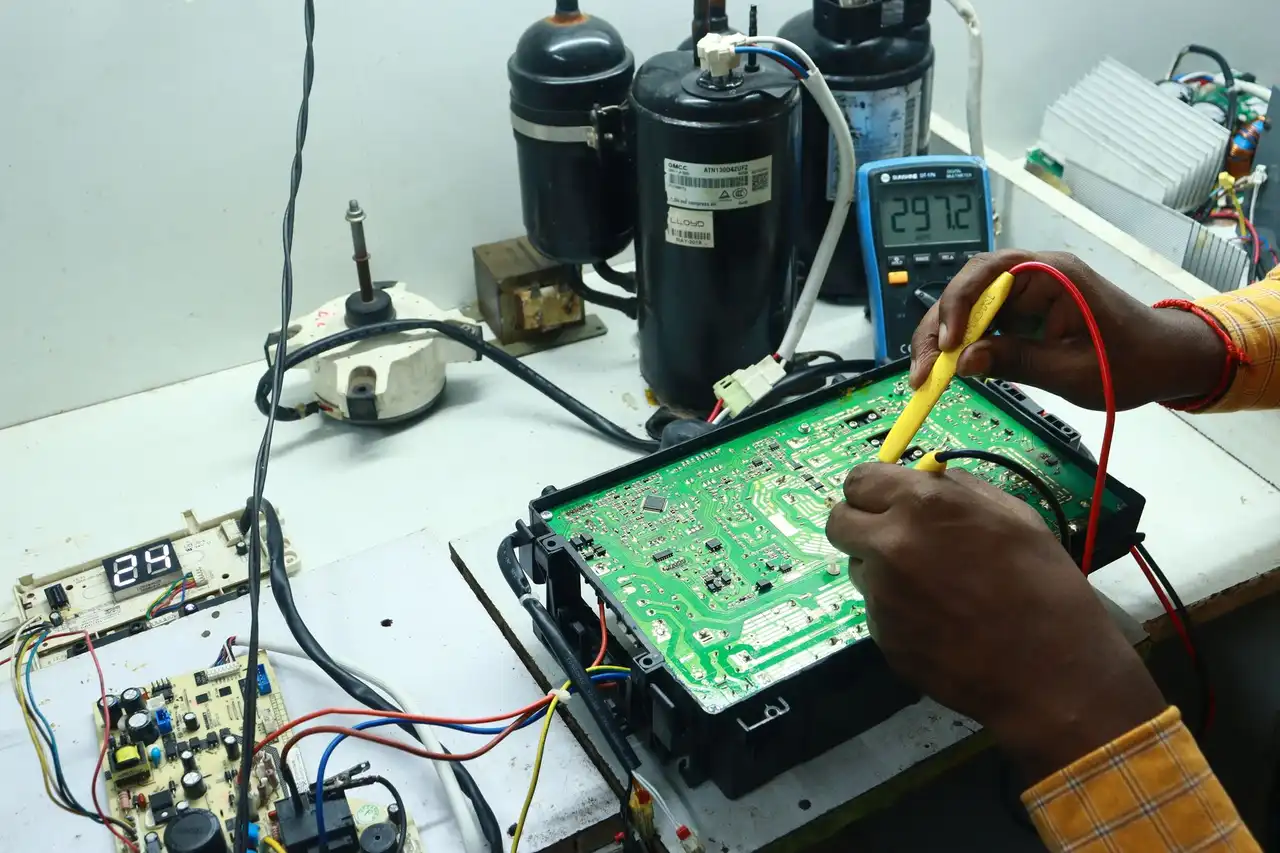
Clamp meter and multimeter
Measures amp draw on the compressor and blower motor, and tests capacitor microfarads and contactor condition. These readings catch failing parts before they fail.
Electronic leak detector
Sniffs for refrigerant leaks at brazed joints, Schrader ports, and coil ends. Finds slow leaks that pressure testing alone would miss.
Vacuum pump and recovery machine
Used when we need to evacuate a system for repair or replace a component. EPA Section 608 rules require recovery, not venting, and we follow them on every job.
Fin comb and coil cleaner
Straightens bent condenser fins and washes away the fine desert dust that packs the coil. Clean coils are the single biggest efficiency win in Las Vegas.
Thermal views are illustrative, generated from the photographs.
Methods
Refrigerant scale
Weighs refrigerant to the ounce when charging, so the system ends up at the exact charge the manufacturer specifies rather than an estimate.
Superheat and subcooling verification
We don't just check that the system has pressure. We calculate superheat and subcooling to confirm the charge is correct for the current outdoor temperature. In Las Vegas, where outdoor temps swing 40 degrees between morning and afternoon, this matters more than in milder climates.
Manual J load calculation
When we recommend a replacement or a major repair, we run a Manual J load calculation to confirm the equipment matches your home's actual cooling load. ACCA standards guide the calculation, and it prevents the oversizing that shortens compressor life.
NATE-certified diagnostic sequence
Every visit follows the same sequence: airflow first, then electrical, then refrigerant. This order catches the most common problems first and keeps us from chasing symptoms instead of causes.
Documented readings every visit
We record pressures, amp draw, capacitor microfarads, and filter size on every visit. Over time that history shows trends, like a capacitor slowly losing microfarads, that a single reading would miss.
When to schedule AC maintenance in Las Vegas
New home baseline
You bought a home in Henderson and don't know the service history of the AC system.
We start with a full inspection: model and serial, refrigerant pressures, capacitor readings, coil condition, and filter size. From there we build a baseline report so you know exactly what you're working with.
Outcome: You get a documented starting point and a clear picture of what needs attention now versus what can wait.
Aging system
Your system is 8 to 12 years old and you want to squeeze a few more summers out of it.
We focus on the wear items: capacitors, contactors, blower motor bearings, and refrigerant charge. Catching these early is how you get 15-plus years out of a system in this climate.
Rental portfolio
You manage rental properties and need documented maintenance for each unit.
We schedule visits in blocks, one door after another, and send a written report with readings and photos for each unit. Property managers get a single invoice and a digital record for every address.
Outcome: Tenant complaints drop, emergency calls drop, and you have proof of service for every unit.
High power bill
We compare current amp draw and refrigerant pressures against manufacturer spec. A dirty coil, a weak capacitor, or a low charge will all show up in the readings, and we can usually fix the cause the same day.
Pre-sale inspection
You're selling your home and the buyer's inspector flagged the AC.
We do a full maintenance visit and provide a written report with all readings documented. If repairs are needed, we quote them and can usually complete the work within a week.
SummerlinSunrise ManorHenderson
How AC maintenance works in the Las Vegas Valley
Las Vegas is one of the hardest climates in the country on cooling equipment. Summer highs run 105 to 115 degrees for weeks, and the system runs 12 to 16 hours a day. That load wears capacitors, dries out duct insulation, and packs condenser coils with fine desert dust. We schedule most maintenance visits in March, April, and October, before and after the peak season.
We also work around the valley's building stock: older homes in Downtown Las Vegas and Sunrise Manor often have undersized return ducts, while newer construction in Summerlin and Enterprise tends to have tighter envelopes that need accurate charge and airflow. Both scenarios show up in the readings we take.
Summerlin: Newer construction with tight envelopes and zoned systems. Charge and airflow accuracy matter more here than raw capacity.
Sunrise Manor: Older housing stock with original ductwork. Undersized returns are common and show up as high static pressure readings.
Henderson: Mix of 1990s and 2000s builds. Many systems are at or past 15 years and benefit from close monitoring of compressor amp draw.
Spring Valley: Lots of two-story homes with upstairs units that run hotter. Upstairs systems often need more frequent filter changes.
North Las Vegas: Newer master-planned communities with builder-grade equipment.
Summer highs of 105 to 115 degrees for weeks at a time: Compressors run at the top of their rated range for months. Capacitors and contactors wear faster here than in milder markets, so we test them on every visit.
We walk the system with you and ask what you've noticed.
We lay drop cloths and set up tools before opening panels.
We review readings, show photos, and email the report.
From problem to finished result.
IllustrativeThe thermal view is generated from the photograph. It is not a measurement. Drag the handle, or use the arrow keys once it is focused.
Dirty condenser coil restored to full airflow
Before: A 9-year-old Goodman system in Spring Valley was running 14 hours a day and couldn't hold 78 degrees by mid-afternoon. The condenser coil was packed with dust, and amp draw was 18 percent above nameplate.
After: After coil cleaning and a capacitor replacement, amp draw dropped to within 3 percent of nameplate. The system now holds 76 degrees and runs about 9 hours a day.
We recommend a spring coil cleaning and a filter change every 60 to 90 days in dusty parts of the valley. That schedule keeps amp draw in range and run time down.
Slow refrigerant leak found before summer
Before: A Trane system in Henderson was cooling fine in April but the homeowner mentioned it seemed to run longer than last year. Our pressure readings showed the charge was 10 ounces low, and a leak detector found a pinhole at a brazed joint.
After: We repaired the joint, evacuated the line set with a vacuum pump, and recharged to manufacturer spec by weight. Superheat and subcooling both landed in range, and the system cycled normally on the first test.
Annual pressure readings catch slow leaks before they cause a freeze-up. We check superheat and subcooling on every visit and log the numbers so trends are visible.
Clogged drain line cleared before water damage
Before: A rental unit in Sunrise Manor had visible water stains on the closet ceiling below the air handler. The condensate drain was scaled with mineral deposits and the float switch had been bypassed by a previous tech.
After: We cleared the line with a vacuum pump, replaced the float switch, and added a pan treatment. The unit has run through two summers since with no water intrusion and no tenant complaints.
We flush the drain line on every maintenance visit and verify the float switch works. In Las Vegas, mineral scale builds faster than biological growth, so annual flushing is the key.
Problems our AC maintenance service prevents
Most summer breakdowns start as small issues that a spring visit would have caught. Here are the four we see most often in Las Vegas, and how we handle each one.
No coolingAC not cooling on a 110-degree afternoonThe house climbs past 85 degrees within an hour, and the system runs nonstop trying to catch up. By the time you call, the compressor may already be cycling on thermal overload. We test refrigerant charge, capacitor condition, and compressor amp draw to find the root cause. In most cases a weak capacitor or a low charge is the culprit, and both are caught during a routine maintenance visit before they cause a failure.
Low chargeRefrigerant leak slowly losing chargeThe system runs longer to hit the thermostat setting, your power bill climbs, and eventually the evaporator coil freezes over. A frozen coil means no cooling at all until it thaws. We use an electronic leak detector and pressure testing to locate the leak, then repair the line or coil and recharge to the manufacturer's spec. Annual pressure readings catch slow leaks before they cause a freeze-up.
Dirty coilDirty condenser coil choking airflowDesert dust packs the outdoor coil fins, which raises head pressure and forces the compressor to work harder. Run time goes up, efficiency drops, and compressor life shortens. We wash the coil with coil cleaner and comb the fins straight during every maintenance visit. A clean condenser coil can cut cooling costs 10 to 15 percent and add years to compressor life.
Clogged drainClogged drain line flooding the closetCondensate backs up into the drain pan, overflows, and damages drywall, flooring, and insulation. In a Las Vegas summer, a system can produce 5 to 10 gallons of condensate per day. We flush the drain line, check the trap and float switch, and verify the pan drains freely. If the line is badly scaled, we clear it with a vacuum pump and add a pan treatment to slow future buildup.
Why Las Vegas homeowners schedule AC maintenance
A maintained system runs cooler, costs less, and lasts longer in desert heat.
Lower summer energy bills
A dirty condenser coil and a weak capacitor force your system to run longer to hit the same thermostat setting. Cleaning the coil and testing electrical components restores airflow and amp draw, which typically cuts cooling costs 10 to 15 percent.
Fewer mid-summer breakdowns
Most August no-cool calls trace back to a part that gave warning signs in April: a pitted contactor, a bulging capacitor, or refrigerant that was 8 ounces low. Preventive AC maintenance Las Vegas service catches those readings before the thermostat hits 82 and the house won't cool.
Longer equipment lifespan
A Carrier or Trane system that gets annual service routinely runs 15 to 18 years in Clark County. The same unit with no maintenance often fails at 9 or 10.
Cleaner air indoors
We swap air filters, inspect the blower motor, and check the evaporator coil for dust and biological growth. In a valley that averages less than 5 inches of rain a year, dust is the main contaminant. A clean coil and fresh filter mean the air moving through your ducts is measurably cleaner.
What you receive
Clear records you can keep and share.
Visit report
Readings, findings, and recommendations
Photo log
Before and after images of key components
Filter record
Size and date for your next change
Service history
Cumulative record across visits
Maintenance versus repair: what's the difference
Maintenance is scheduled work on a running system. Repair is fixing something that has already failed. Both matter, but they solve different problems.
Preventive
Scheduled work on a running system
Spring and fall visits
Cleaning and testing
Catches wear early
Corrective
Fixing a component that has failed
Same-day or next-day
Parts replaced on site
Restores cooling fast
Emergency
After-hours response to a no-cool call
Live dispatcher
Truck stocked with parts
Priority scheduling
What we work with
Capacitors
Contactors
Filters
Thermostats
Coils
Drain lines
Line sets
Blower motors
Service ZIP codes.
A list like this tells people straight away whether you cover their street. Not listed? Call and ask: it only takes a minute.
Frequently asked questions about AC maintenance in Las Vegas
Twice a year: once in spring before the cooling season and once in fall after it. Las Vegas systems run 8 to 10 months a year, so annual service is the minimum. If you have pets, live near a construction site, or your system is over 10 years old, we recommend a mid-summer check as well. A spring visit catches worn capacitors and low refrigerant before July.
A standard visit covers 20-plus checkpoints: refrigerant pressure and charge, capacitor and contactor testing, condenser and evaporator coil inspection, blower motor amp draw, drain line clearing, filter replacement, thermostat calibration, and electrical connection tightening. You get a written report with all readings. Parts and refrigerant are quoted separately if needed.
It prevents most of them. Roughly 70 percent of the no-cool calls we run in July and August trace back to a component that showed warning signs months earlier: a weak capacitor, a pitted contactor, or refrigerant that was slowly leaking. A spring tune-up catches those readings while the system is still running, so you're not calling at 9 p.m. on a 112-degree day.
Yes. Our Las Vegas HVAC maintenance plan includes two scheduled visits per year, priority scheduling during peak season, and a discount on any repair work. Plans start at a flat annual rate for a single system, with per-unit pricing for multi-family and small commercial properties. Call to enroll and we'll get your first visit on the calendar.
Schedule AC Maintenance Las Vegas NV before the next heat wave
Spring and fall slots fill fast in the valley. Book your maintenance visit now and we'll confirm a two-hour arrival window the same day. One flat price, written report, no upsells.
Call us any time, day or night, for no-cool emergencies. For routine service, we book morning and afternoon windows and confirm before we head your way. You can also email us with your address and a quick description of the problem, and we will get back to you fast.