For Homes
We handle overnight breakdowns for homeowners and renters across the valley. You get a diagnosis with real readings and a repair quote before we start.
- AC blowing warm at night
- Breaker trips when it starts
- Ice on the indoor coil
When your system quits at 2 a.m. and the house is still 91 degrees, you need 24 Hour AC Repair in Las Vegas that actually answers the phone. We run emergency air conditioning repair in Las Vegas for homeowners, renters, and property managers across the valley, diagnosing failed capacitors, refrigerant leaks, and dead compressors with the right tools on the truck. One call, one dispatch, and we work until the air is cold again.
 Amp draw checkCoil inspectionCharge verification
Every overnight call includes a full diagnostic, not just a guess at the most obvious part. Here is what you get when we show up, and what we will quote separately if your system needs it.
We check the thermostat, air handler, outdoor unit, and all electrical connections. Amp draw, capacitor microfarads, refrigerant pressures, and temperature split across the evaporator coil all get measured and recorded before we recommend anything.
Capacitors, contactors, thermostats, float switches, and blower motors are common enough that we stock them. If the fault is one of those, we fix it on the spot and you are cooling again within the same visit.
We use an electronic leak detector and pressure testing to find leaks at flare fittings, Schrader ports, and coil joints. We repair the leak, pull a vacuum with a vacuum pump, and recharge to the manufacturer's specified weight using a refrigerant scale.
A clogged drain line is one of the most common causes of a midnight shutdown, because the float switch trips and cuts the system off. We clear the line, flush the trap, and check the pan for standing water before we leave.
Las Vegas dust and cottonwood pack a condenser coil fast, which drives up head pressure and kills compressors. We clean the coil with condenser coil cleaner and straighten bent fins with a fin comb when airflow is restricted.
You get a record of what failed, what we replaced, the part numbers, and the readings we took.
The approach is the same for a home and a business. What changes is the access, the schedule and who needs the paperwork.
We handle overnight breakdowns for homeowners and renters across the valley. You get a diagnosis with real readings and a repair quote before we start.
We take after-hours calls for restaurant, retail, and office systems. Property managers get a written summary with part numbers for every job.
A plain-language look at what 24 Hour AC Repair involves and when it is needed.
See how it works24 Hour AC Repair in Las Vegas is emergency HVAC service that diagnoses and fixes a failed cooling system outside normal business hours, usually within hours of your call. A working tech arrives with a manifold gauge set, multimeter, and clamp meter, reads the system pressures and electrical draw, then traces the fault to a bad capacitor, a clogged drain line, a frozen evaporator coil, or a compressor that has finally given out. We repair on the spot whenever the part is on the truck.
Las Vegas summers do not cool off at night. When the low is still 88 degrees at midnight, a dead AC turns a bedroom into an oven fast, and that is exactly when most breakdowns happen. We handle Las Vegas emergency HVAC repair for families in Summerlin, Spring Valley, and North Las Vegas, plus after hours AC repair in Las Vegas, Nevada for rental owners whose tenants call at 1 a.m. If your AC broke down at night in Las Vegas, we roll a truck instead of putting you on a morning callback list.
A proper diagnosis with instrument readings beats swapping parts and hoping.
No mystery, no waiting around guessing. Here is the exact sequence from your first call to cold air coming out of the vents.
You call, a live person answers, and we log your address, system type, and what the unit is doing. If it is a tripped breaker or a thermostat in the wrong mode, we walk you through a two-minute check that sometimes solves it free. If not, we dispatch the nearest tech and text you the ETA.
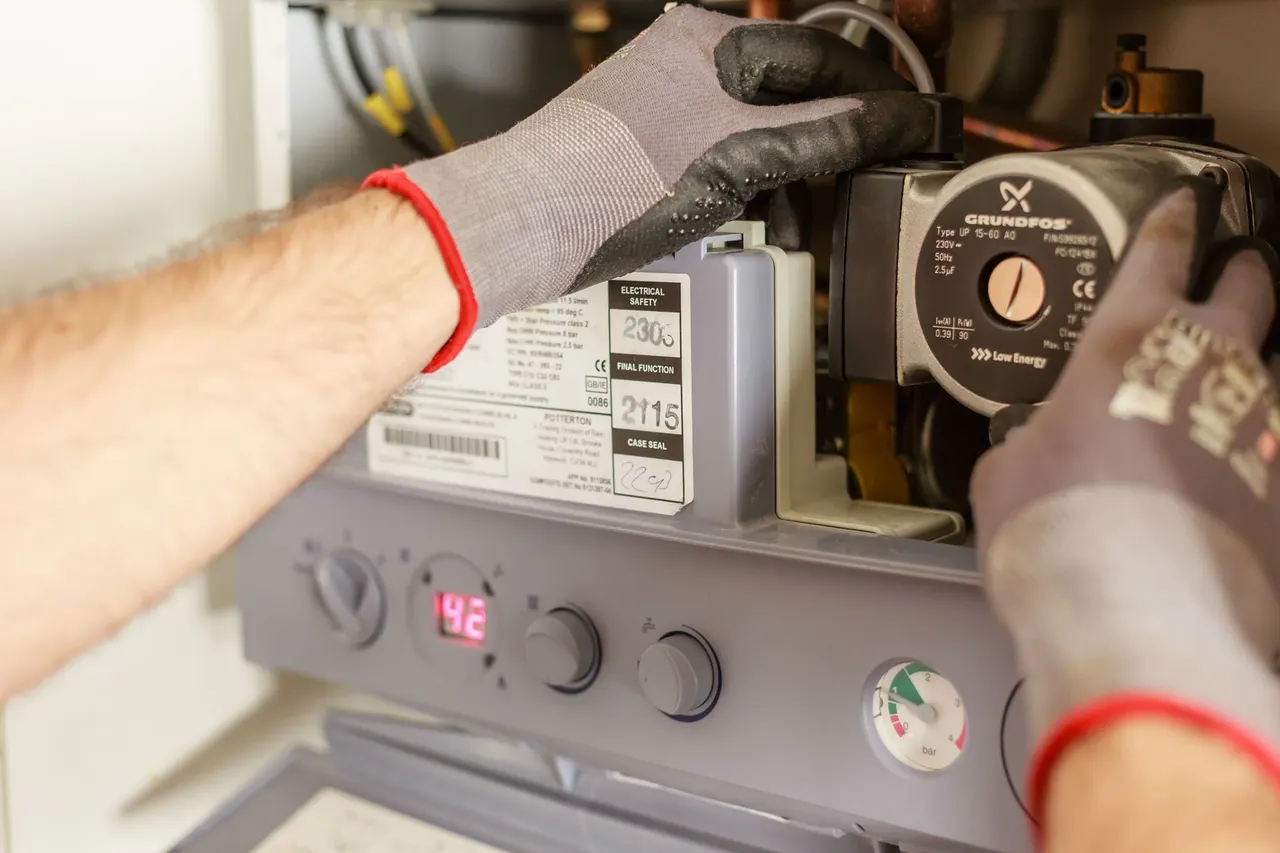
The tech arrives, confirms the address, and asks what you saw and heard when it quit. We check the thermostat, the air handler, and the outdoor unit, then pull the service panel. Expect 10 to 15 minutes of listening and inspecting before any diagnosis is given.
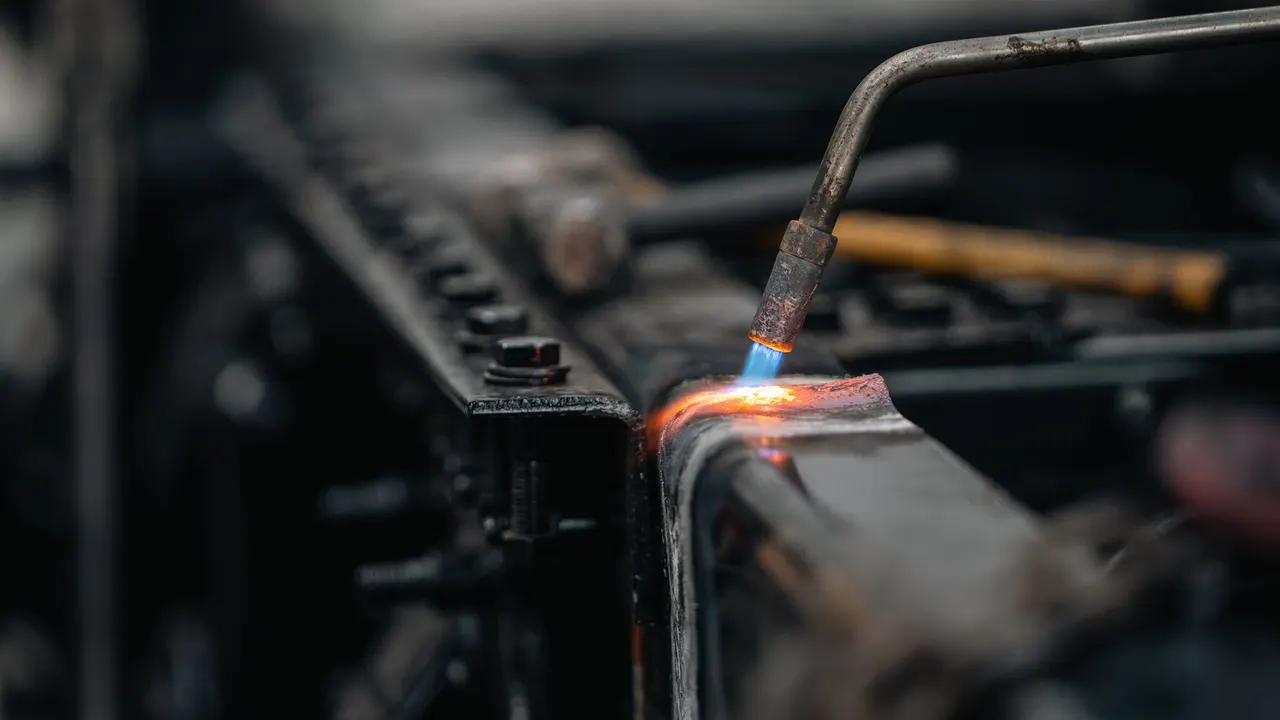
We clamp the compressor leads, read running amps, and hook a manifold gauge set to the service ports. Superheat and subcooling tell us whether the charge is right. A leak detector sweeps the evaporator coil and line set. This is where we find the actual fault, not just the symptom.
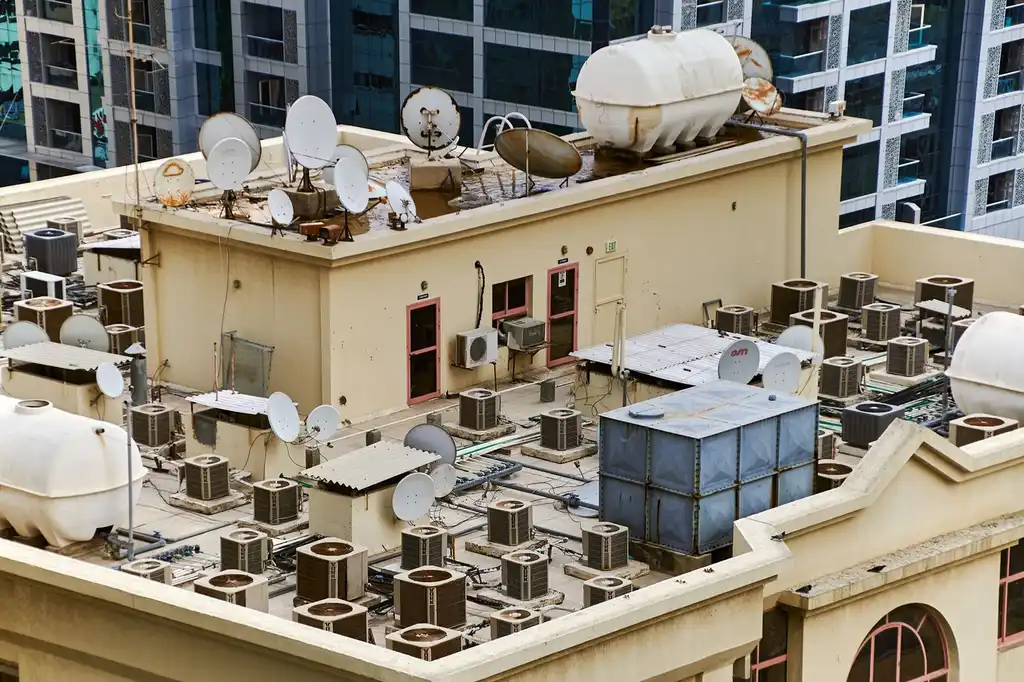
Once we know the fault, we quote the repair and get your approval. Most fixes take 45 to 90 minutes. After the repair we run the system for a full cycle, confirm the temperature split across the evaporator coil is 18 to 22 degrees, and check that the condensate drain is flowing clear.
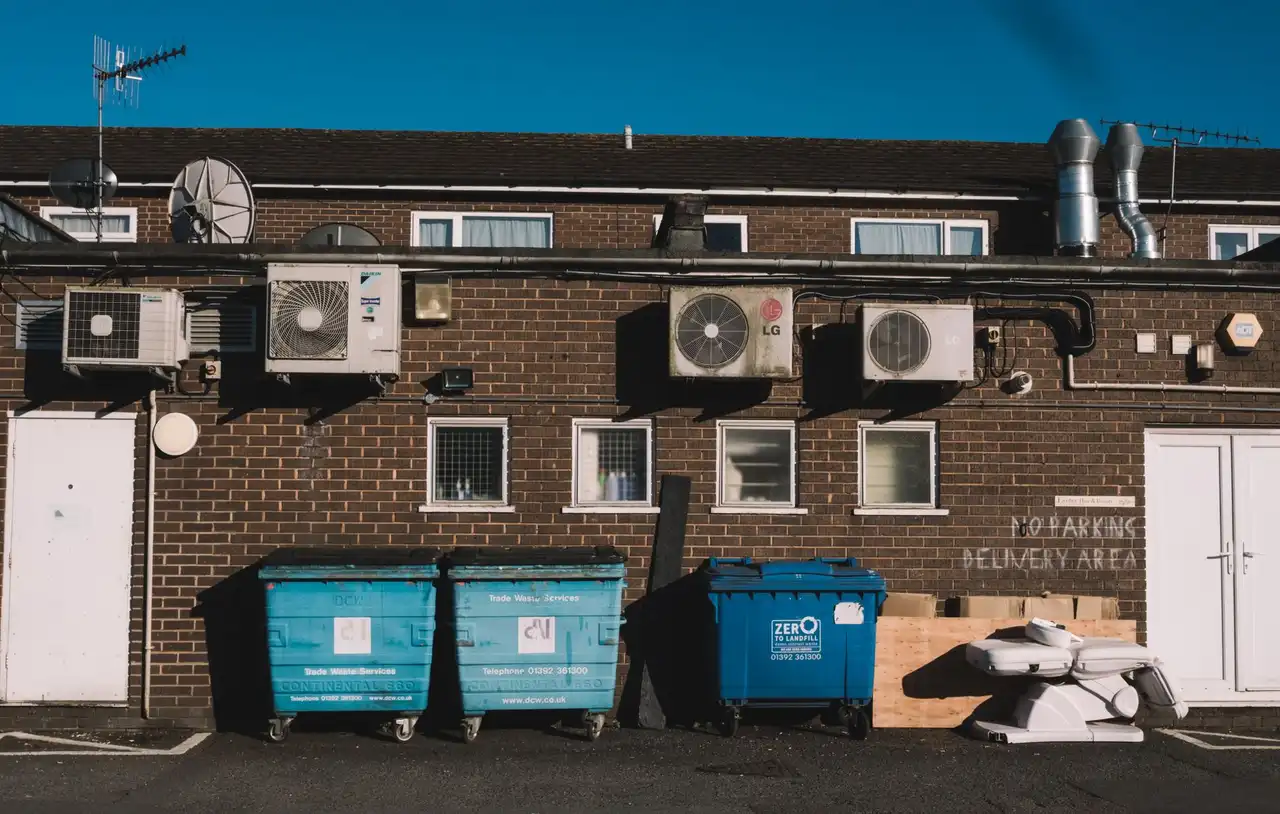
Before we leave, we show you what failed, what we replaced, and what to watch for. If we found a dirty condenser coil or a filter that has not been changed since spring, we tell you. You get a written summary of the work and the part numbers for your records.
Move across a circle, or focus it and press Enter, for an illustrative thermal view of the photograph.
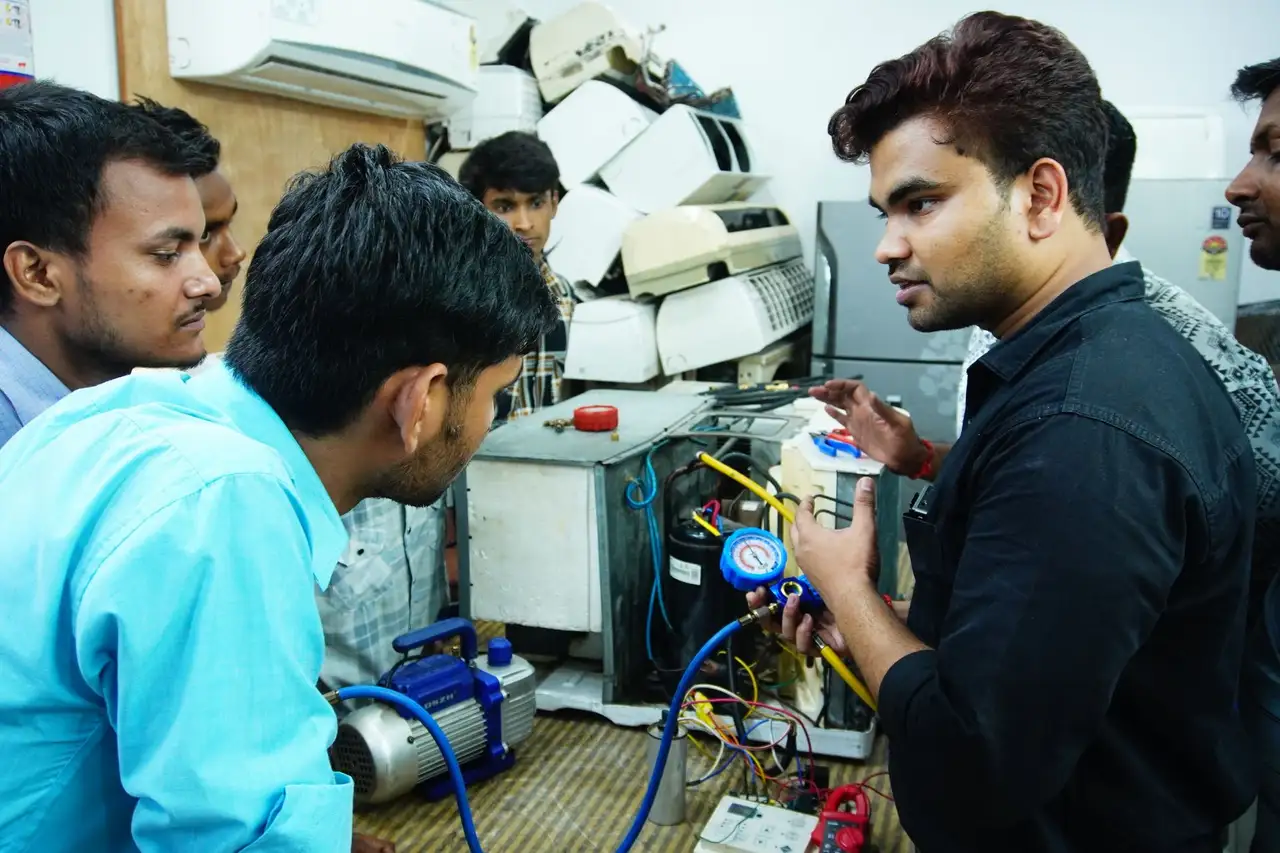
Reads high-side and low-side pressures so we can calculate superheat and subcooling and confirm whether the refrigerant charge is correct.
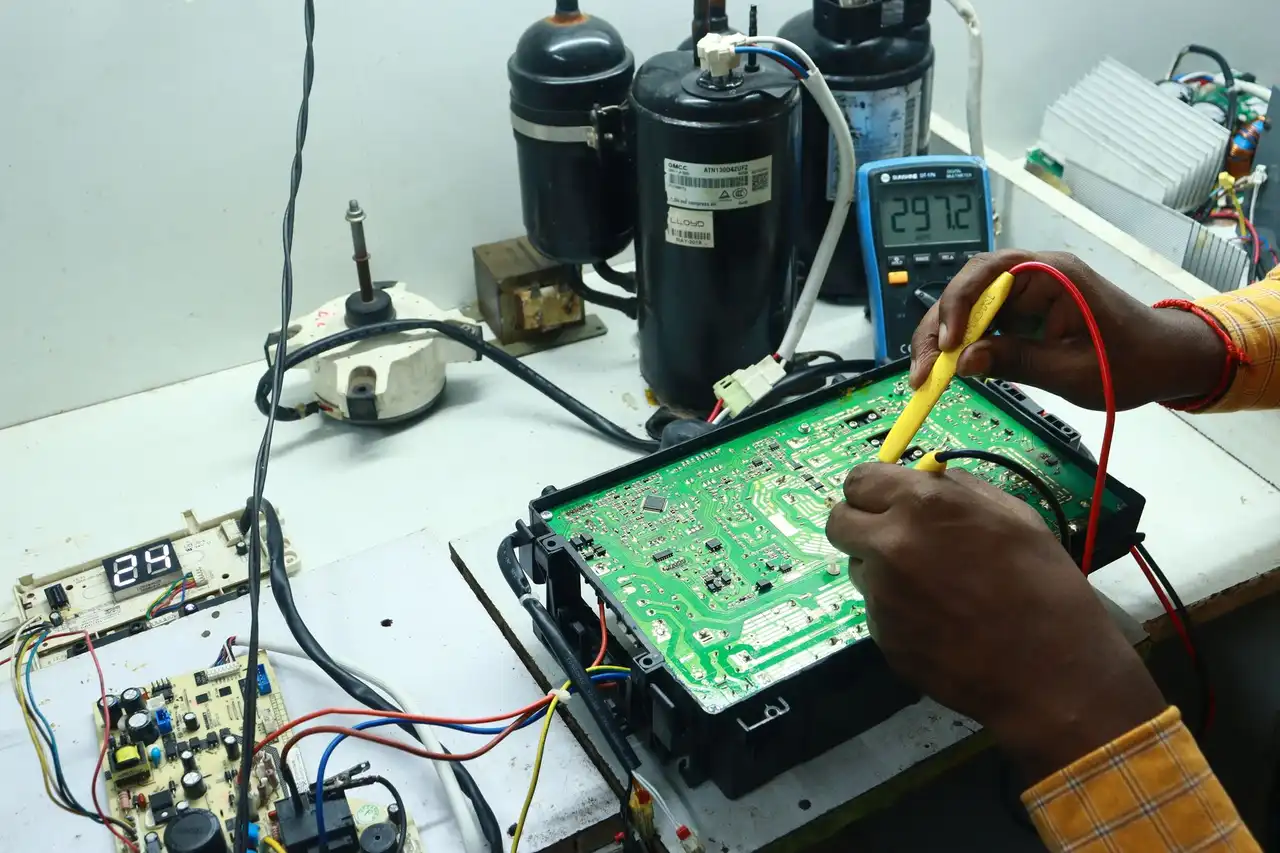
Measures running amps on the compressor and fan motors, and tests capacitors, contactors, and control voltage to isolate electrical faults.
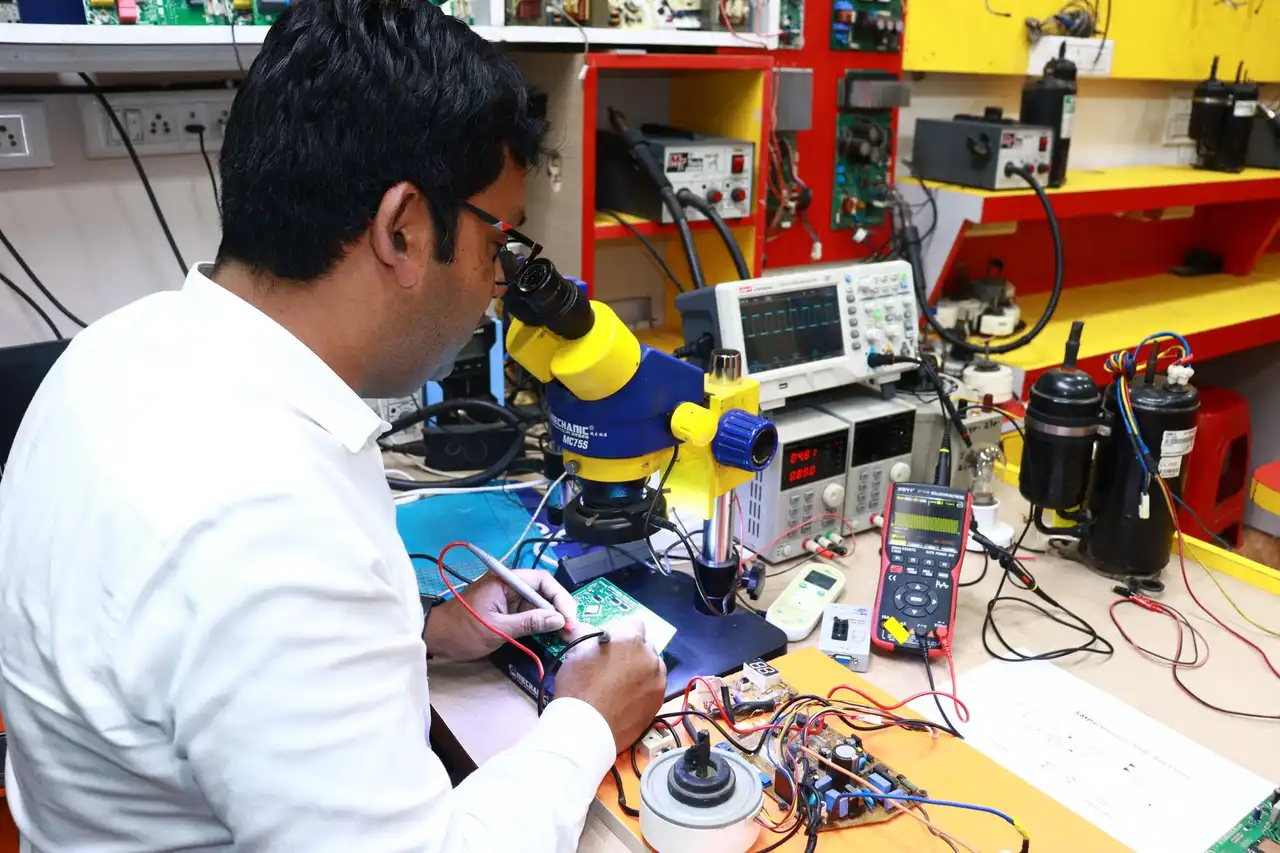
Sniffs out refrigerant leaks at flare fittings, Schrader ports, and coil joints that pressure testing alone can miss on a slow leak.
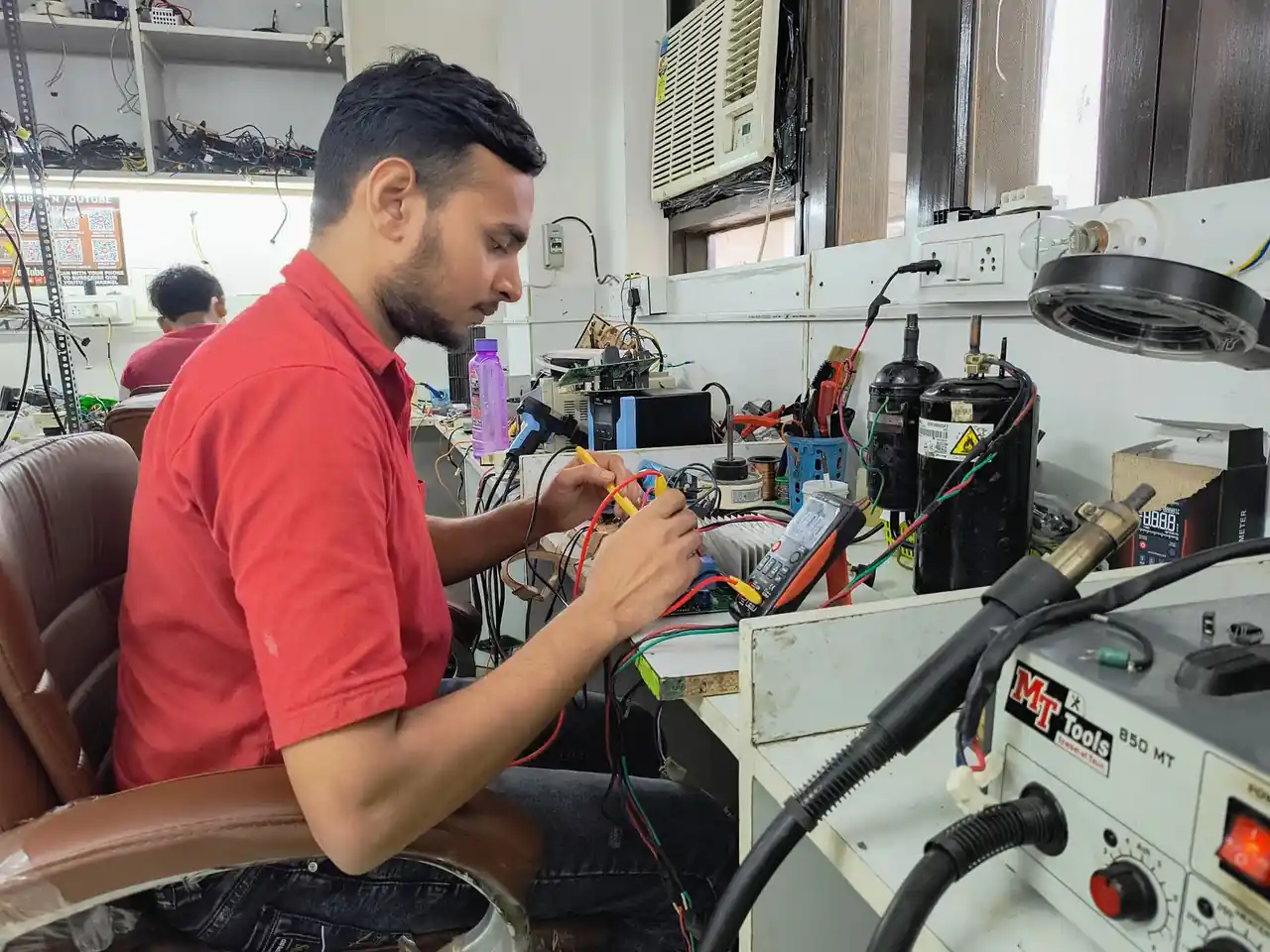
Pulls a deep vacuum after a leak repair and charges refrigerant by weight to the manufacturer's spec instead of guessing by pressure.
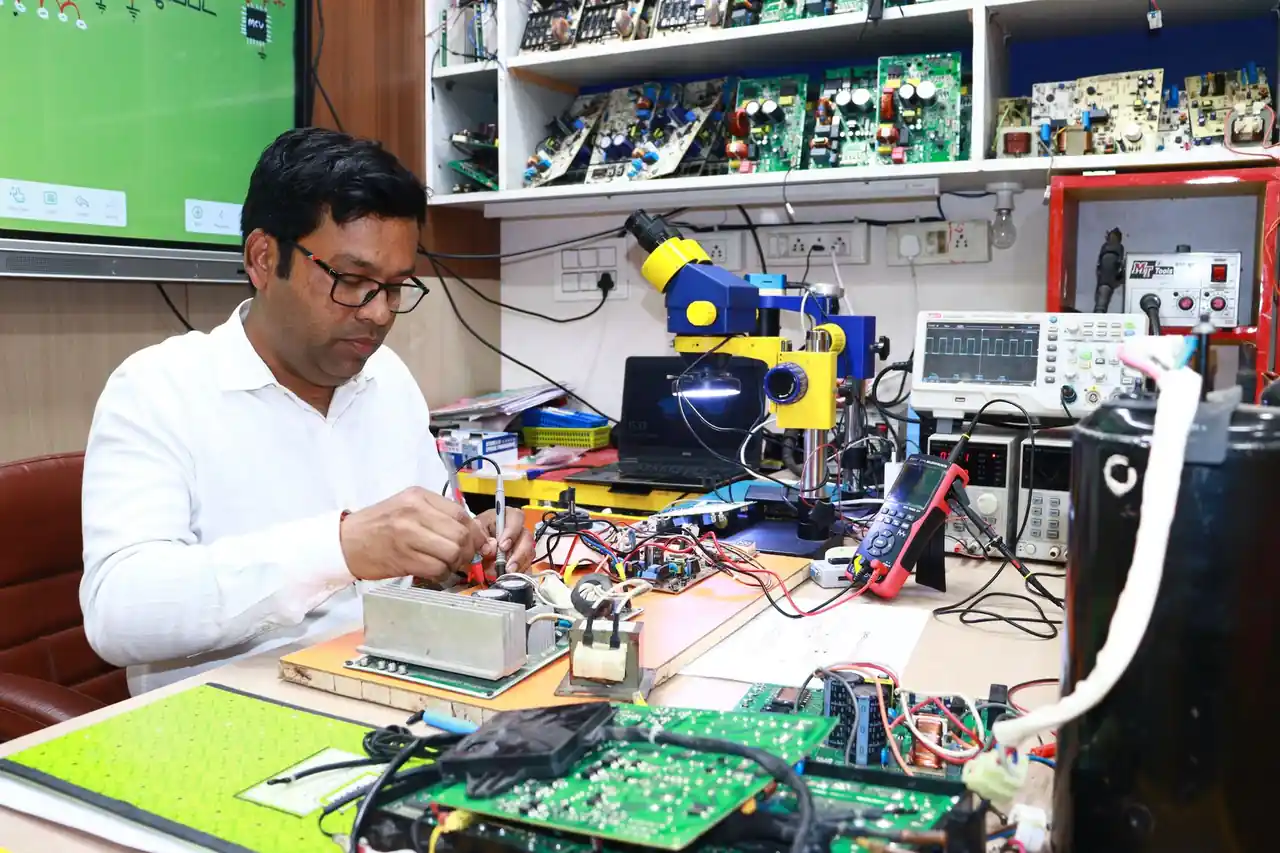
Cleans dust and cottonwood out of the outdoor coil and straightens bent fins so airflow and head pressure return to normal.
Thermal views are illustrative, generated from the photographs.
Cuts and prepares copper line set for flare or braze repairs when a leaking section has to be replaced rather than tightened.
Recovers refrigerant into a recovery cylinder before any repair that opens the sealed system, as required by EPA Section 608 rules.
We charge refrigerant by measuring superheat on fixed-orifice systems and subcooling on TXV systems, then matching the numbers to the manufacturer's chart. This is more accurate than charging by pressure alone, especially on a 105-degree day when pressures run high.
Every motor and compressor has a rated amp draw on its data plate. We measure actual draw against that rating to catch a failing compressor or a fan motor that is working too hard before it fails completely.
When a repair turns into a replacement conversation, we run a manual J load calculation using the home's square footage, window orientation, insulation, and duct layout. That prevents oversizing, which causes short cycling and humidity problems.
We recover, recycle, and recharge refrigerant according to EPA Section 608 rules. That means no venting to atmosphere, proper recovery cylinders, and documentation of refrigerant used on every job.
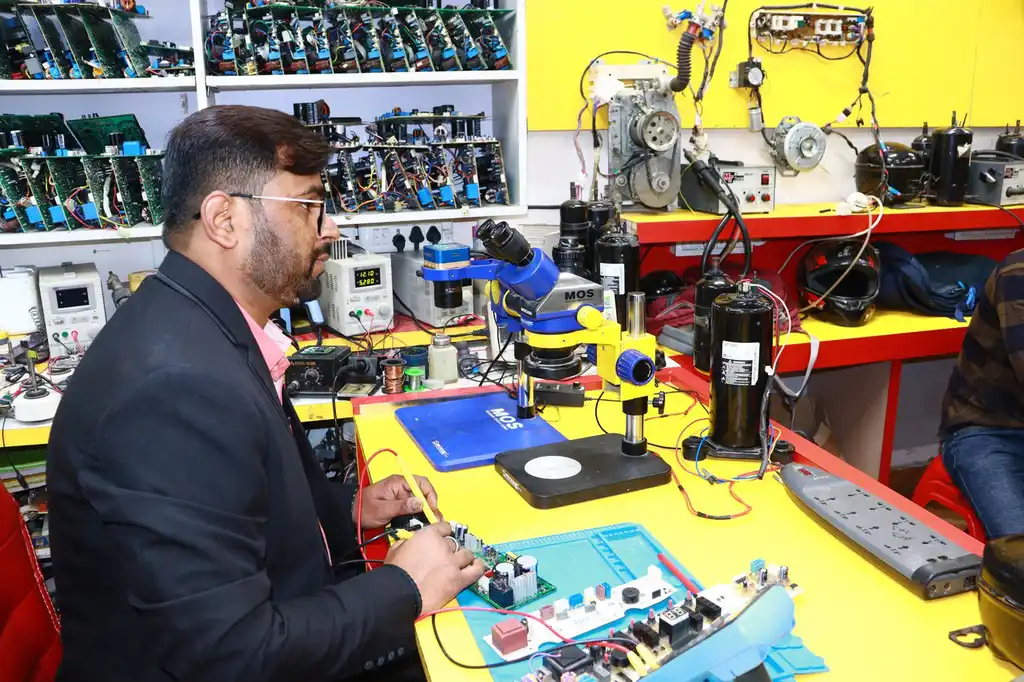
A family in Enterprise wakes up at 2 a.m. to a house at 88 degrees and a system that will not start.
We dispatch the nearest tech, who arrives within 90 minutes, diagnoses a failed run capacitor, and replaces it from the truck stock. He also cleans the condenser coil, which was packed with dust and running the head pressure high.
Outcome: Cold air returns by 3:30 a.m., and the family is back asleep. The capacitor and coil cleaning together cost less than a single night in a hotel.
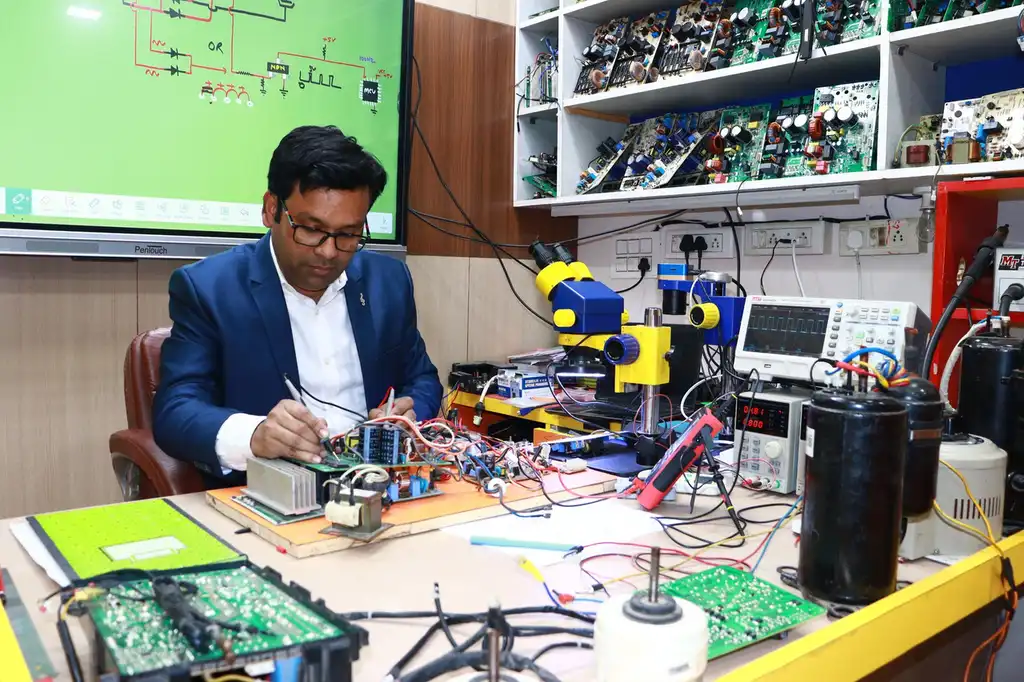
A landlord in North Las Vegas gets a text from a tenant at 11 p.m. saying the AC is out and the unit is making a grinding noise.
We take the call, dispatch, and find a seized condenser fan motor. We replace the motor, verify amp draw, and check the capacitor that feeds it, since a bad capacitor is usually what killed the motor in the first place.
Outcome: The tenant has cooling the same night, the landlord avoids a habitability complaint, and the repair is documented with part numbers for the property file.
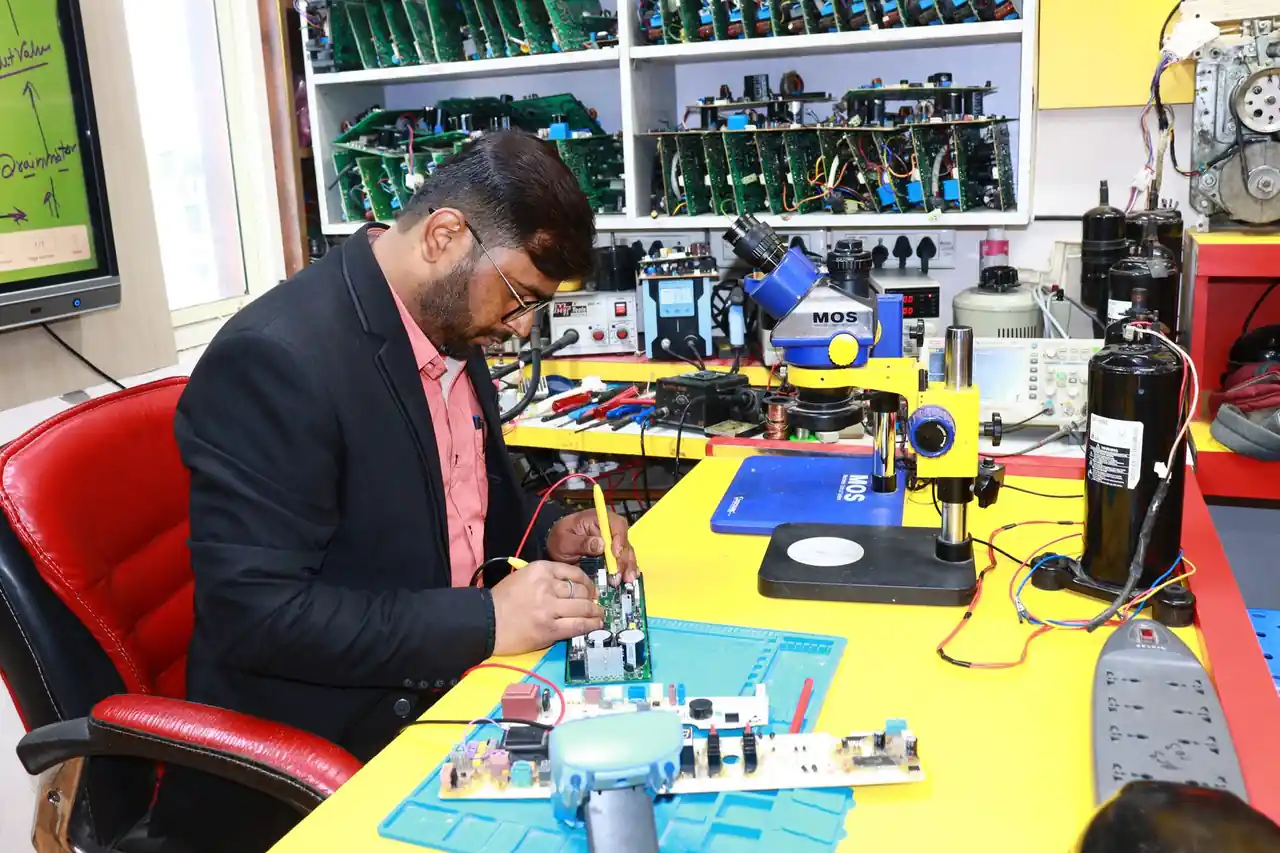
A restaurant near Paradise loses cooling in the dining room at 9 p.m. on a Saturday with a full house.
We roll a commercial tech who checks the rooftop unit, finds a failed contactor, and replaces it. He also checks the belt, the blower, and the condensate pan, since a restaurant unit runs hard and rarely gets serviced.
Outcome: The dining room is back to 74 degrees before the late rush, and the owner gets a written summary to file with the maintenance log.
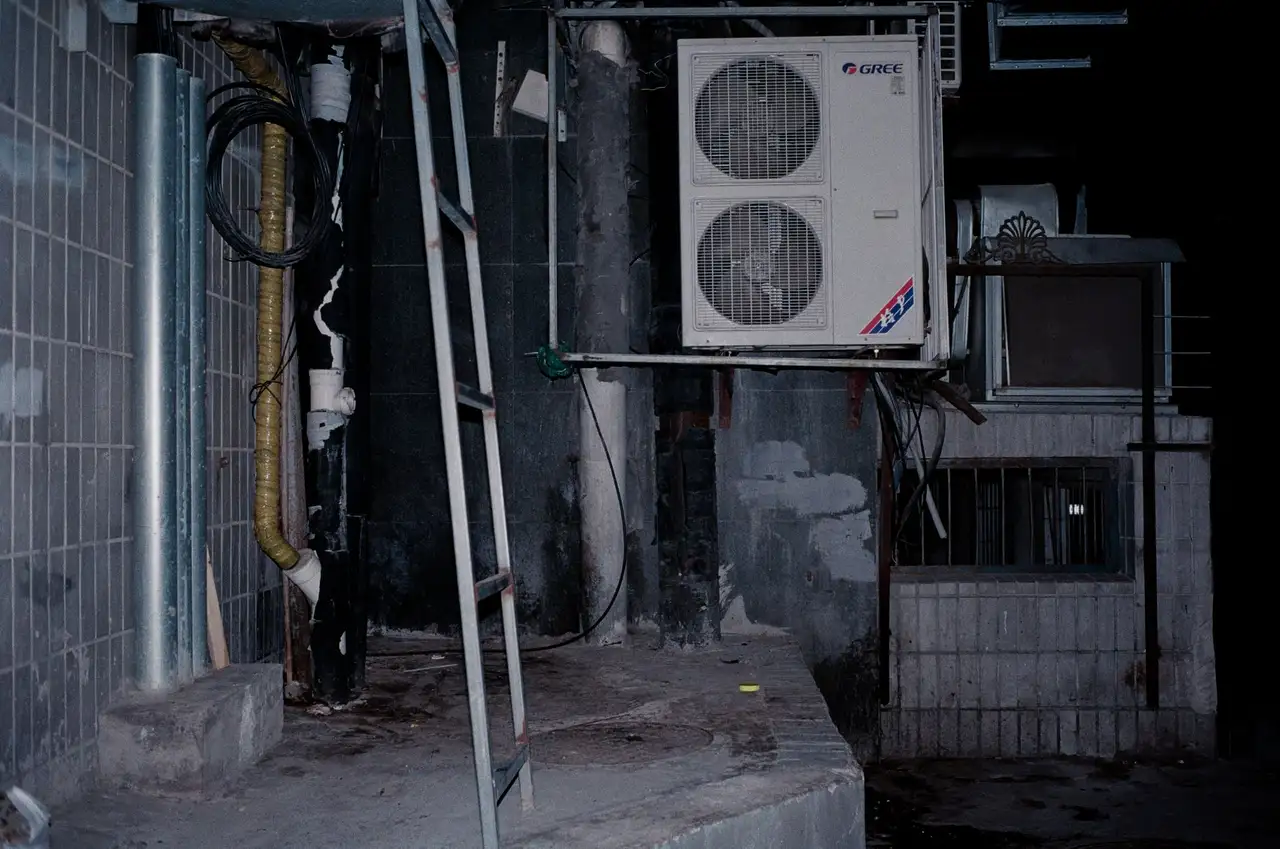
A homeowner in Sunrise Manor notices the AC is short-cycling and the house never gets below 82, even at midnight.
We diagnose a slow refrigerant leak at a flare fitting, repair the flare, pull a vacuum with a vacuum pump, and recharge by weight using a refrigerant scale. We also check the filter and blower to rule out airflow problems.
Outcome: The system holds temperature through the next heat wave, and the homeowner avoids a compressor replacement that would have run into the thousands.
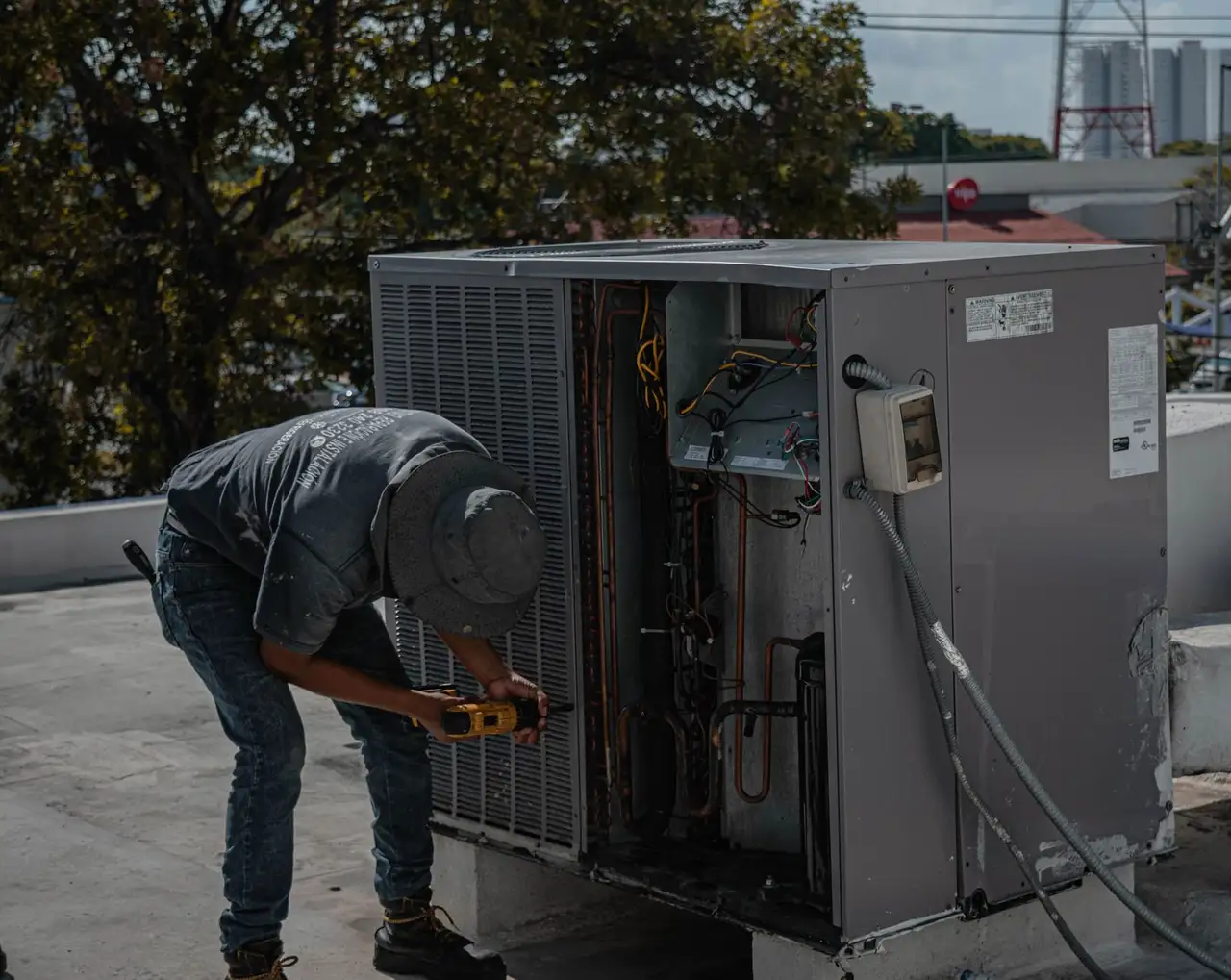
A duplex owner in the 89107 ZIP code has one unit cooling fine and the other blowing warm air at 1 a.m.
We test both systems side by side, find the failing unit low on R-410A with a leaking Schrader port, replace the port, and recharge. The comparison between the two units makes the diagnosis faster.
Outcome: Both units are cooling by morning, and the owner has a baseline set of readings for the healthy unit to compare against next summer.
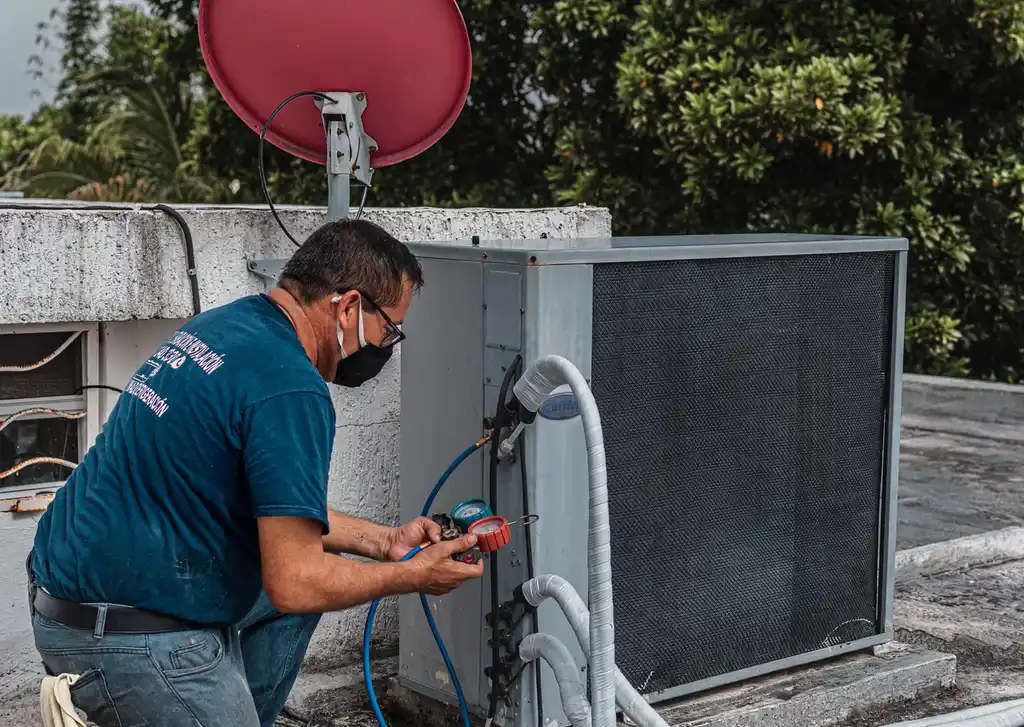
Las Vegas cooling systems work harder than almost anywhere in the country. Summer highs sit above 105 degrees for weeks, overnight lows often stay in the upper 80s, and the valley's dust and cottonwood load up condenser coils fast. That combination means compressors run near their limits and capacitors fail under the strain.
We see the same pattern every July: systems that were marginal in June start tripping breakers, and homeowners start searching for night AC repair service Las Vegas at 1 a.m. Building stock matters too. Older homes around ZIP 89102 and 89104 often have original ductwork with leaks that rob capacity, while newer builds in 89146 and 89149 have tight envelopes that cool quickly once the system is charged right.
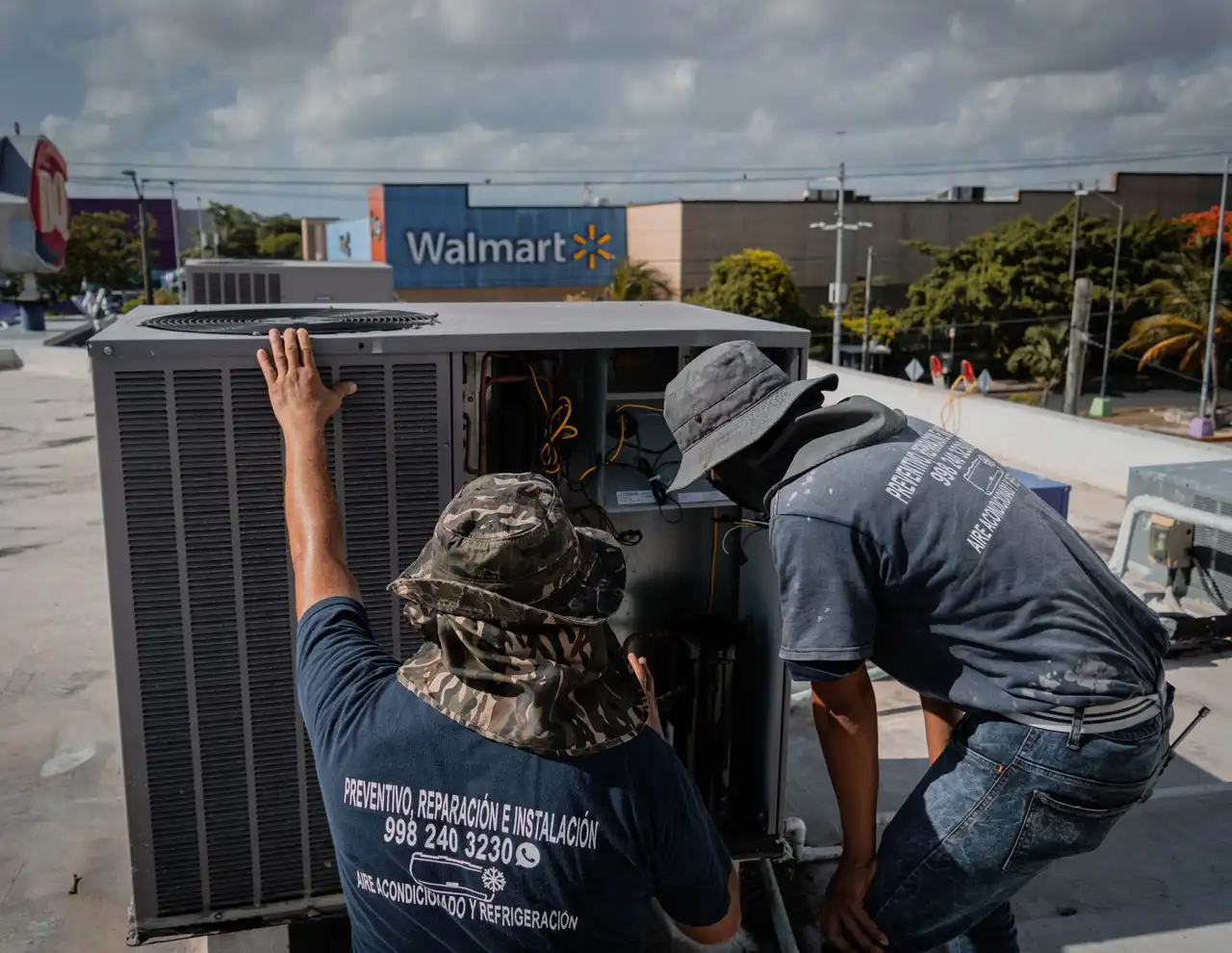
Before: A homeowner in Spring Valley called at 11:40 p.m. with a system blowing warm air. The outdoor unit was humming but the fan was not spinning. The house had climbed to 87 degrees and two kids were trying to sleep in it.
After: We arrived in 75 minutes, tested the dual-run capacitor, and found it reading 18 microfarads against a 35-microfarad rating. We replaced it, checked compressor amp draw against the data plate, and had cold air flowing by 1:15 a.m.
We recommended a spring tune-up to test the new capacitor and clean the condenser coil. Capacitors degrade with heat, and a yearly microfarad check catches them before they fail on a 110-degree day.
Before: A rental in North Las Vegas had a system that ran constantly but never got below 82 degrees. The tenant had been dealing with it for two weeks, and the last company just added refrigerant without finding the leak.
After: We pressure tested the line set, found a leaking flare fitting at the outdoor unit, repaired the flare, pulled a vacuum to 500 microns, and recharged by weight to the data plate spec. The temperature split went from 9 degrees to 21 degrees, and the system held through the next heat wave.
We told the owner to have the flare connections checked each spring and to keep the filter changed every 60 days. Flare fittings loosen over time, and a slow leak caught early costs far less than a compressor.
Before: A family called at 2 a.m. after their system shut off completely. The thermostat was blank and the breaker was not tripped. The house was at 86 degrees and climbing, and they had a newborn in the house.
After: We found a clogged condensate drain line that had tripped the float switch. We cleared the line, flushed the trap, dried the pan, and reset the switch. The system restarted immediately, and we confirmed the drain was flowing clear before leaving.
We suggested pouring a cup of vinegar down the drain pan every month during cooling season. Las Vegas water leaves mineral scale that builds up fast, and a monthly flush keeps the line clear.
These are the failures we see most often when a Las Vegas system quits in the middle of the night. Each one has a different fix and a different price, which is why we diagnose before we quote.
Cold air back tonight, with readings that prove the fix.
We staff overnight calls instead of routing you to voicemail. A live dispatcher takes your address, your system brand, and your symptoms, then sends the closest tech. Most overnight calls in the valley get a tech on site within 90 minutes, and you get a text when they are rolling.
Common failures get fixed on the first visit. We carry capacitors, contactors, thermostats, and R-410A refrigerant so a bad run capacitor or a tripped float switch does not turn into a two-day wait for a part. Roughly 7 out of 10 night calls are repaired the same visit.
You get the diagnostic fee and the repair price before we touch a wrench. No overtime surprise, no inflated midnight rate.
A capacitor that fails twice in one summer usually means the compressor is pulling too many amps. We check amp draw against the data plate, inspect the condenser coil for dust and cottonwood, and tell you straight whether a repair holds or a replacement makes more sense.
Clear records you can keep and share.
What failed and what we replaced
Amp draw, pressures, temperature split
Part numbers for your records
Images of the failed component
That matters at 2 a.m. when a system is short-cycling and you need someone who can read a gauge set in the dark and tell you the truth about whether the compressor is worth saving.
We run manual J load calculations before recommending any replacement, so you buy the right tonnage.
Experienced with Nest and Ecobee thermostat faults that mimic a dead compressor but cost far less to fix.
We document amp draw, superheat, and subcooling on every call so the next tech has real numbers.
A list like this tells people straight away whether you cover their street. Not listed? Call and ask: it only takes a minute.
Based in Las Vegas and covering the places around it. Pick one for local details.
We do, and we staff it with live dispatchers rather than an answering service. Call any hour and you reach a person who can dispatch a tech, walk you through a breaker or thermostat check, or tell you to shut the system down to prevent compressor damage. Most overnight calls in Clark County get a tech on site within 90 minutes.
Yes. Sunday is one of our busiest days because weekend breakdowns pile up fast in July and August. We run the same dispatch schedule seven days a week, including holidays. The diagnostic fee is the same on Sunday as it is on Tuesday, and we do not add a weekend surcharge to the repair price.
Turn the thermostat to off, not just down, so a failing compressor does not keep trying to start. Check the air filter and swap it if it is gray and matted. If you see ice on the indoor coil or the copper line, leave the system off until we arrive, because running a frozen evaporator coil can slug the compressor with liquid refrigerant.
The diagnostic fee is quoted upfront, and we give you the full repair price before we start work. No surprise overtime rate.
Other services from the same team.
Tell us what your system is doing and we will tell you what it will cost before we start.
Call us any time, day or night, for no-cool emergencies. For routine service, we book morning and afternoon windows and confirm before we head your way. You can also email us with your address and a quick description of the problem, and we will get back to you fast.